Gunite is the dry-mix process, where dry cement and sand are sprayed through a hose and water is added at the nozzle. Shotcrete is the wet-mix process, where the concrete is fully mixed with water before it ever reaches the hose. Both produce a strong structural concrete shell, and both can last 50 years or more when applied correctly by an experienced crew. Neither one is universally better. The differences show up in application, cost, and how each method handles a custom shape. At Splash City we build with gunite, and below is exactly why it fits the work we do.
If you have been researching pool construction, you have probably seen gunite and shotcrete used interchangeably, sometimes even on the same page. That is not entirely wrong, but it is not the full picture either. Here is what the terms actually mean, and why the distinction matters more than most builders explain.
Wait, Aren't Gunite and Shotcrete the Same Thing?
Technically, gunite is a type of shotcrete. Shotcrete is the umbrella term for any concrete that gets sprayed onto a surface through a hose rather than poured into forms. Gunite specifically refers to the dry-mix version of that process, and the name has stuck around in the pool industry so thoroughly that a lot of builders use gunite and shotcrete as if they mean completely different materials. They don’t.
In fact, plenty of companies use shotcrete as their general term for the spray application process regardless of which specific method their crews actually run. The real distinction that matters is dry-mix versus wet-mix, which comes down to one simple question, when does the water get added.
What Is Gunite? The Dry-Mix Process
In dry-mix application, dry cement and sand are blown through the hose separately, and water gets added right at the nozzle as the crew sprays. That puts a lot of responsibility on the nozzleman, the person actually controlling the spray.
The upside is real flexibility. Dry-mix crews can pause and restart mid job without ruining the batch, which matters on a custom residential pool with sun shelves, benches, and curved walls rather than a straightforward rectangle.
The tradeoff is that it demands a genuinely skilled operator. Too much water at the nozzle weakens the shell. Too little drives up something called rebound, material that bounces off the surface instead of bonding to it, which has to be cleared away rather than reused.
Why the Crew Matters More Than the Method
This is the point most comparison articles skip, and it is the one that actually matters. In dry-mix, the water to cement ratio is being managed by hand, in real time, by the person holding the nozzle. That is how the method is designed to work, and an experienced nozzleman produces an excellent shell consistently. But it does mean the crew matters at least as much as the method itself. Either process can produce an outstanding shell or a poor one depending on who is running it, which is why asking a builder who sprays their shells, and how long that crew has worked together, tells you more than asking which of the two words they use.
What Is Shotcrete? The Wet-Mix Process
Wet-mix concrete is fully mixed with water at a batch plant, then delivered to the site ready to spray, often by a ready-mix truck, before compressed air pushes it through the hose and onto the surface.
Because the mix is proportioned before it ever leaves the plant, the water to cement ratio is consistent and verifiable from the first spray to the last. The process generally moves faster and produces less rebound waste, which makes it well suited to large pours where volume and speed matter.
The tradeoff is flexibility. Once the truck arrives, the clock is ticking. Wet-mix is harder to pause mid pour, and it has to be applied fairly quickly, especially in Florida heat, since the water in the mix can evaporate faster than a crew can shape it.
Gunite vs. Shotcrete at a Glance
Factor | Gunite (Dry-Mix) | Shotcrete (Wet-Mix) |
|---|
Mixing method | Dry sand and cement, water added at the nozzle | Pre-mixed wet concrete, delivered ready to spray |
Water ratio control | Managed on site by the nozzleman | Proportioned at the batch plant |
Waste (rebound) | More rebound, cannot be reused | Less rebound, faster application |
Shaping flexibility | Can pause and hand shape as the crew works | Continuous application, harder to pause |
Commonly used for | Custom residential shapes, sun shelves, spas, curves | Large, simple shapes, commercial scale jobs |
Does the Water to Cement Ratio Matter?
It does, and it is worth understanding without overstating it. According to the American Shotcrete Association, dry-mix typically runs a lower water to cementitious materials ratio, generally 0.35 to 0.40, compared to wet-mix at roughly 0.40 to 0.45. Less water in the mix generally means less shrinkage as the concrete cures.
That said, both methods are capable of meeting the same structural standards, and a well executed wet-mix shell will outperform a poorly executed dry-mix one every time. The ratio is one factor among several, and application quality is the one that decides the outcome.
Gunite vs. Shotcrete Cost: Which Is Cheaper?
The material itself is not where the price difference comes from, cement, sand, and steel cost roughly the same either way. The real cost driver is local availability, labor, and the complexity of your pool’s shape.
Dry-mix gunite is the more common method in most Florida markets, so regional crews and equipment are generally set up to deliver it efficiently, which tends to make it the practical choice for a typical residential job here. Wet-mix shotcrete can be more cost effective on large, simple shapes where speed matters more than detail, which is part of why it shows up more often on commercial projects.
For a custom backyard pool with real design features, the deciding factor is usually which method your specific builder specializes in, not a fixed price difference between the two.
How Long Does a Gunite or Shotcrete Shell Actually Last?
A properly applied shell, gunite or shotcrete, can last 50 years or more. The structural concrete underneath is not the part that wears out first. What actually needs attention over time is the interior finish, plaster, pebble, or quartz, which typically needs resurfacing every 7 to 15 years depending on water chemistry and use. The shell itself, if it was built correctly the first time, is a one time structural investment.
That last part matters more than the mixing method. A properly loaded mix, a correct water ratio, and experienced hands shaping the shell determine whether a pool lasts 50 years or develops problems far sooner, regardless of whether it was built dry-mix or wet-mix.
What Curing Has to Do With It
A shell’s long term strength is set in the weeks right after it is sprayed, not on the day itself. Per the American Shotcrete Association, the shell needs a minimum 7 day wet cure for basic strength, and a full 28 day moist cure is recommended before an interior finish goes on. Rushing that window is one of the few genuinely avoidable ways to compromise a shell that would otherwise last decades, which is why we treat those dates as fixed rather than flexible even when a homeowner is eager to swim.
Why We Build With Gunite
To be clear, this is not a case of one method being right and the other being wrong. Both produce strong, long lasting pools in capable hands, and plenty of excellent pools have been built with wet-mix shotcrete.
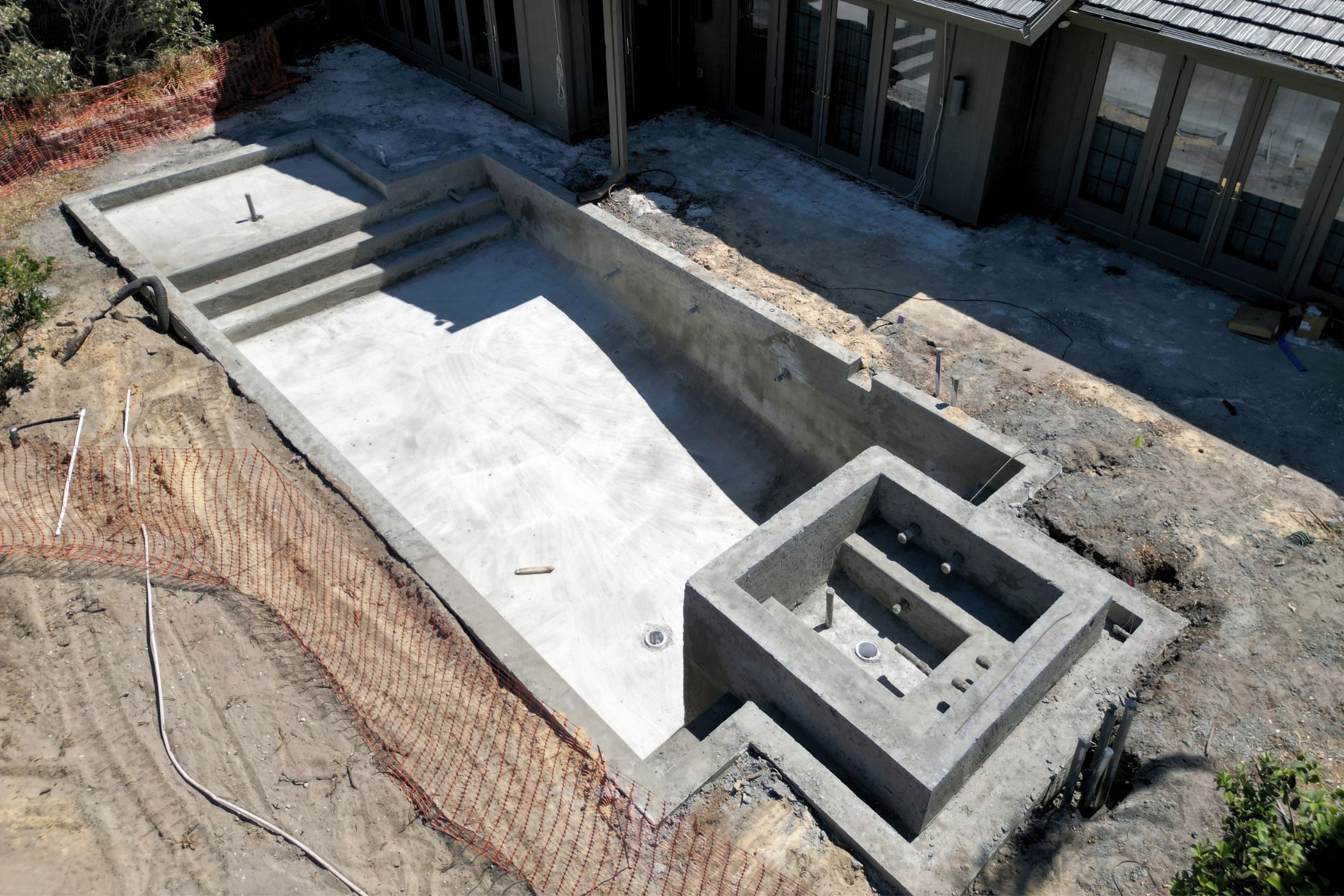
We build with gunite because of the kind of work we do. Almost everything we build is a custom design rather than a stock rectangle, which means sun shelves, benches, integrated spas, curved walls, and multiple depths. Dry-mix lets our crew work at the pace the shape requires, pausing and hand shaping details as they go rather than racing a truck. That control is the reason we use it.
If you are weighing a custom design, it is worth raising during your new pool construction consultation, since the method your builder uses affects both the design possibilities on the table and how the shell gets repaired years down the road if you ever renovate.
What This Means If You Are Renovating an Existing Pool
Cracks, structural repairs, and resurfacing on an older pool almost always involve the same spray application methods described here, just applied to patch or reinforce an existing shell instead of building a new one.
Since the interior finish wears out well before the structural shell does, a pool renovation is often about restoring that finish rather than the shell itself, but if your contractor has mentioned structural work, understanding which method was used originally, and which one your renovation crew plans to use, is worth asking about before work begins.
Common Questions
The Shell Is the One Part You Only Build Once
Finishes get redone, equipment gets replaced, decks get resurfaced. The structural shell underneath is the part that has to be right the first time, and that comes down to the crew building it more than the term on the invoice. Schedule your free 3D design and estimate and we will walk through what fits your pool, your budget, and the features you actually want.