If you’re planning a new pool for your Tampa Bay home, you’ve probably already run into the same question every homeowner faces early in the process. Should you go with a concrete pool or a fiberglass pool?
Both options can deliver a beautiful backyard oasis, but they get there in very different ways. The right choice depends on your budget priorities, your timeline, how much customization you want, and how much long term maintenance you’re willing to take on. At Splash City Pools, we’ve built both types for families across Brandon, Valrico, and the greater Tampa Bay area, so we’ve seen firsthand what each material delivers once the water is actually in the ground.
This guide walks through the real differences so you can make a confident, informed decision for your property.
What Is a Concrete Pool?
A concrete pool, also called a gunite or shotcrete pool, is built entirely on site. A steel rebar framework is constructed to your pool’s exact shape, then concrete is sprayed over that framework to form the shell. Once the shell cures, it’s finished with a surface material such as plaster, pebble, or quartz aggregate.
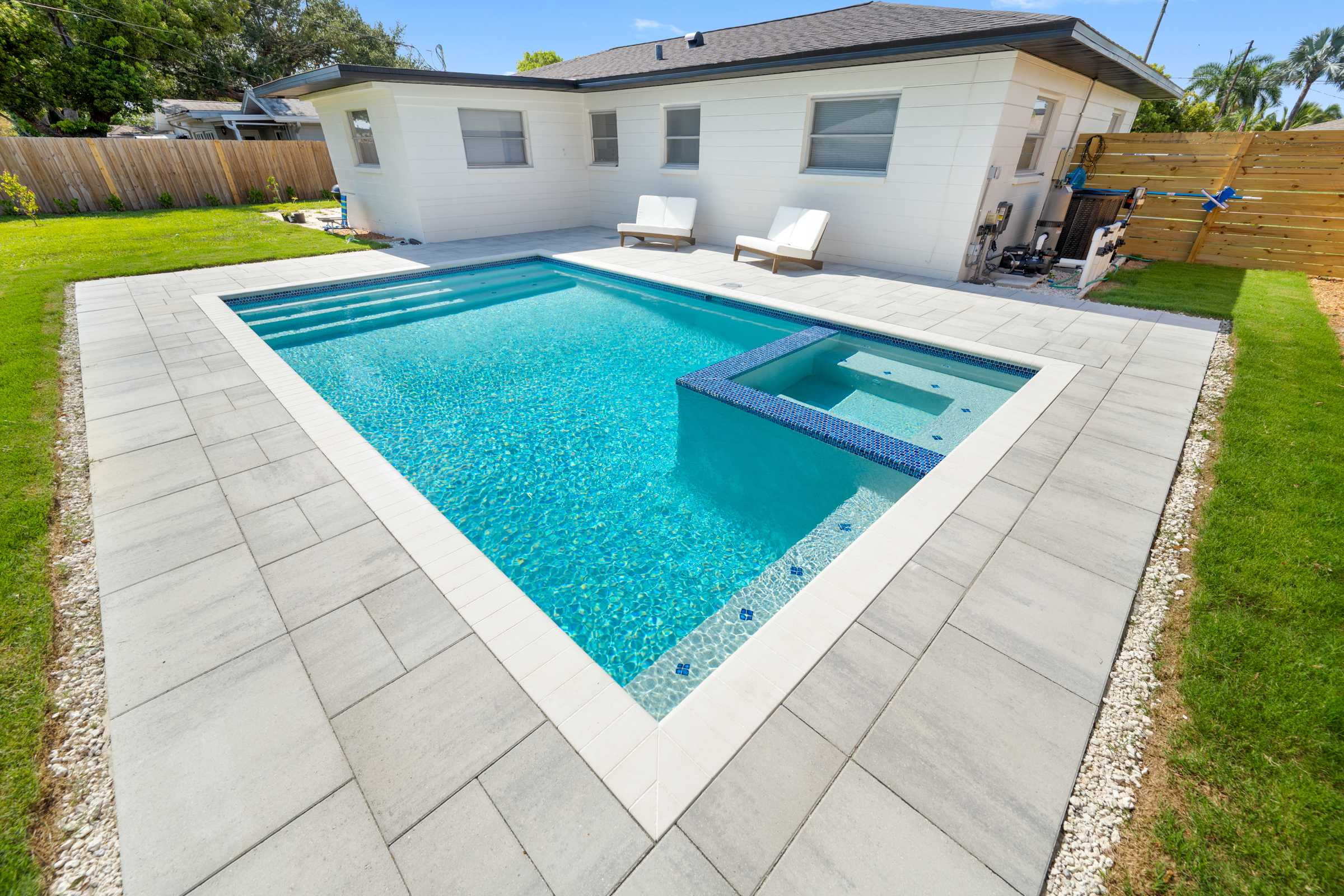
Because the shell is built from scratch on your property, concrete pools can be designed in essentially any shape, depth, or configuration you want. Custom tanning ledges, vanishing edges, attached spas, and unusual geometric shapes are all common with concrete construction.
What Is a Fiberglass Pool?
A fiberglass pool is manufactured off site as a single, pre formed shell. It’s built in a factory, cured, and then transported by truck to your property, where it’s lowered into a prepared excavation in one piece.
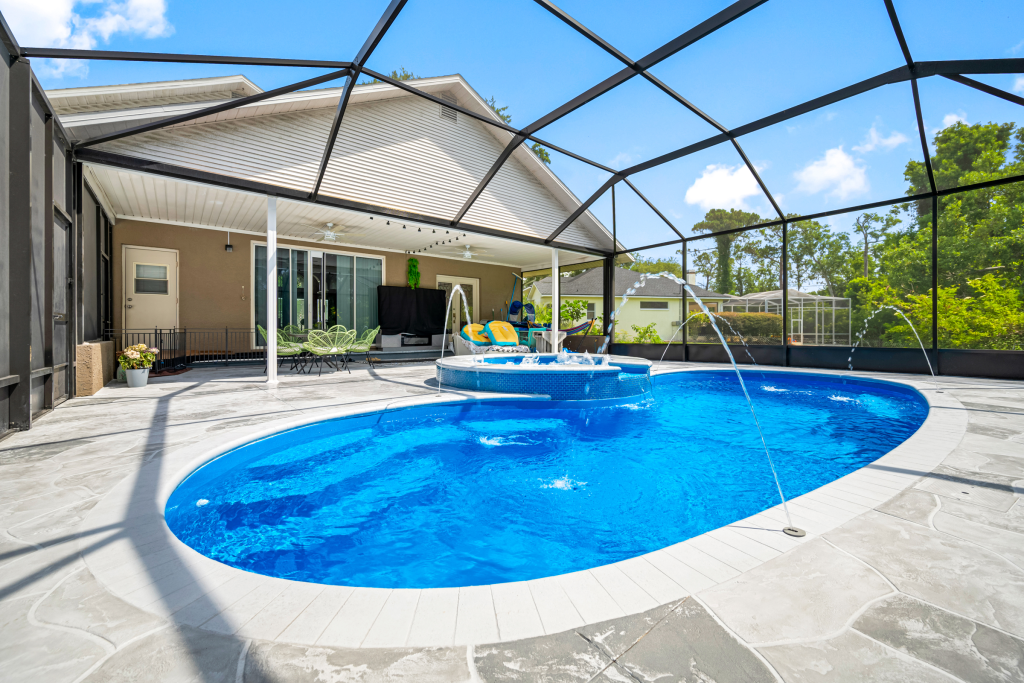
Because the shell arrives already complete, fiberglass installations move faster than concrete builds. The shapes and sizes are limited to what the manufacturer offers, though today’s fiberglass catalogs include a wide range of designs, from classic rectangles to freeform lagoon styles with built in tanning ledges and spas.
How Concrete and Fiberglass Pools Actually Compare
This is one of the biggest differentiators. Fiberglass pools are typically installed much faster since the shell arrives ready to place. Many fiberglass projects can go from excavation to water in a matter of weeks.
Concrete pools take considerably longer because every stage happens on site and requires curing time between steps, from the rebar and shotcrete work to the interior finish and tile. A concrete build is a bigger commitment of time, but that time buys you complete design freedom.
How Much Design Freedom You Actually Get
If you have a very specific vision for your backyard, an unusual lot shape, or you want features like a custom raised spa, a negative edge, or a pool that wraps around existing landscaping, concrete gives you the most freedom. There’s no limit to shape or size beyond what your property and budget allow.
Fiberglass has expanded a lot over the years, and today’s shells come in attractive, well engineered designs. But you are still selecting from a manufacturer’s catalog of shapes and sizes rather than designing from a blank slate.
What Upkeep Looks Like Day to Day
Fiberglass shells have a smooth gel coat surface, which tends to resist algae growth better than concrete and generally requires less scrubbing and fewer chemicals over time. Many owners find fiberglass pools easier to maintain week to week.
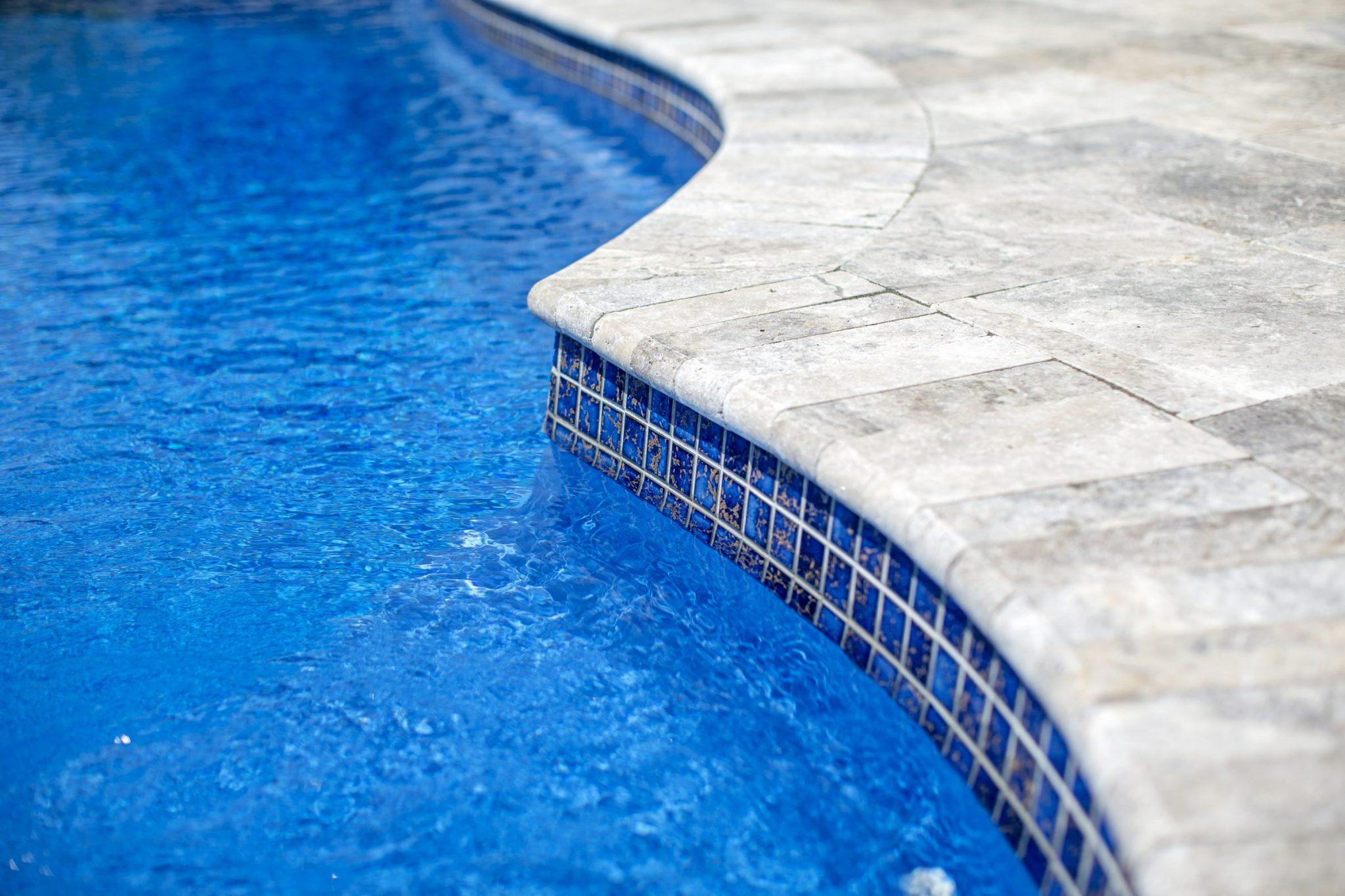
Concrete surfaces, particularly plaster finishes, have a slightly more textured feel and are more porous, which can make them more prone to algae and may require more regular brushing and chemical balancing. Upgraded finishes like pebble or quartz aggregate help with durability and texture, and are a common upgrade for concrete builds in our market.
How Each Holds Up Over the Years
Concrete pools are extremely durable structurally and can last for decades, but the surface finish will eventually need resurfacing, typically after a decade or more depending on the finish type and how well the water chemistry has been maintained.
Fiberglass shells generally hold their gel coat finish longer without needing the kind of resurfacing concrete requires. The flip side is that fiberglass shells have a size ceiling based on what can be manufactured and transported, so if you’re dreaming of a very large or heavily customized pool, concrete may be the better fit.
If you’re planning to run a saltwater system, that’s worth factoring in early. Fiberglass surfaces handle saltwater well since the shell is non corrosive. Concrete surfaces are more sensitive to saltwater over time, so that’s a detail worth discussing during your design consultation if a saltwater system is important to you.
Which One Makes More Sense in Florida's Climate?
Fiberglass pools tend to perform very well in Florida’s high water table areas since the shell is a single, sealed unit that resists ground shifting and water intrusion. Many homeowners in our market appreciate the lower maintenance demands during our long pool season, since Florida pools are used essentially year round.
Concrete pools remain an excellent choice in Florida as well, especially for homeowners who want a pool that’s fully customized to a specific lot, want to incorporate a spa or water feature, or are working with an irregular yard shape that a manufactured shell simply can’t accommodate.
Neither option is universally better. It really comes down to what matters most for your household, your yard, and your long term plans for the space.
Fiberglass shells generally hold their gel coat finish longer without needing the kind of resurfacing concrete requires. The flip side is that fiberglass shells have a size ceiling based on what can be manufactured and transported, so if you’re dreaming of a very large or heavily customized pool, concrete may be the better fit.
If you’re planning to run a saltwater system, that’s worth factoring in early. Fiberglass surfaces handle saltwater well since the shell is non corrosive. Concrete surfaces are more sensitive to saltwater over time, so that’s a detail worth discussing during your design consultation if a saltwater system is important to you.
Common Questions
Ready to talk through your options?
Schedule a design consultation with Splash City Pools and we’ll walk you through what makes sense for your yard, budget, and timeline.