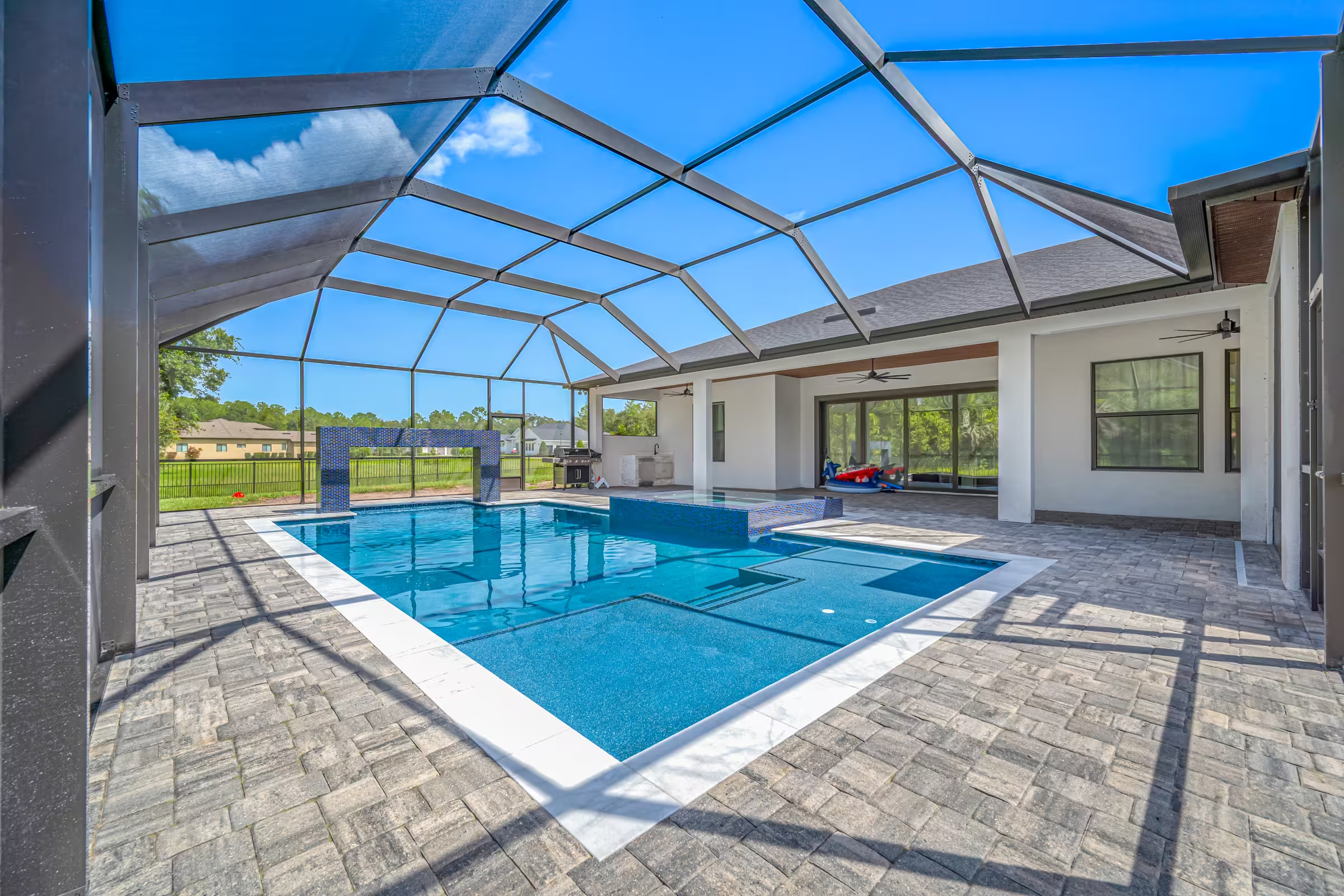
Most Splash City pools take about 8 to 10 weeks to build once construction begins, though larger or more detailed projects can run closer to 12 weeks. That covers everything from layout and excavation through the final fill and inspection. Before that clock starts, permitting has to clear, and that stage varies more than construction does, since timelines differ by jurisdiction and can run anywhere from 4 to 12 weeks depending on where your property sits and how busy the local permitting office is. A good pool builder works to keep that first stage as tight as possible, but construction itself follows a fairly predictable week by week sequence once it starts.
If you just signed a contract, or you are close to it, here is what actually happens between now and the day you swim.
The Two Timelines Nobody Separates: Permitting and Construction
Most articles quote a single number for how long a pool takes. That number is almost always the construction phase alone, and it skips the part that happens before a single shovel goes into the ground.
In Tampa Bay, permitting and construction genuinely run on different clocks. Permitting depends on paperwork, plan review, and which government office has jurisdiction over your address. Construction depends on weather, crew scheduling, and how long concrete needs to cure, which is a fixed number no builder can shortcut. Understanding both halves separately is the only way to get a realistic picture.
Phase 1: Design, Engineering, and Permitting
Before construction starts, your design gets finalized, engineered, and submitted for permit review. This is also the phase where jurisdiction matters most.
Tampa Bay is not one permitting office, it is many. If your property sits inside Tampa city limits, your permit goes through the City of Tampa’s Construction Services. If you are in unincorporated Hillsborough County, which covers a lot of the neighborhoods we build in, including Brandon and Riverview, your permit goes through Hillsborough County Development Services instead. Pasco County, which covers Wesley Chapel and Land O’ Lakes, runs its own building department, and Pinellas, Polk, and Manatee each run theirs. Same state building code, different offices, different queues.
Permit review timing genuinely swings with jurisdiction and season, and it varies more than any other stage of the process. Depending on which office is reviewing your plans and how busy they are, review can run anywhere from about 4 weeks on the fast end to 12 weeks during the busiest stretches. If your neighborhood has an HOA, plan on that approval running in parallel, since some Tampa Bay communities require it before construction can begin.
This is also exactly why we walk clients through design and engineering as its own dedicated step in our new pool construction process rather than rushing straight to a shovel. A complete, accurate submission the first time is the single biggest thing that keeps this phase from dragging.
What Actually Slows a Permit Down
Most permit delays are not the county being slow, they are a submission going out incomplete and coming back for corrections. Every round trip adds time, and a package that gets kicked back twice can add weeks that had nothing to do with how busy the office was. Survey issues, missing engineering details, and unresolved setback questions are the usual culprits.
This is the part of the process where choosing a builder who submits complete packages routinely, and who already knows the requirements for your specific jurisdiction, pays for itself in weeks rather than dollars.
What to Expect: Week by Week
Once your permit is issued, here is the sequence a typical Splash City build follows, from breaking ground to your final inspection.
Week 1: Layout, Dig, and Steel
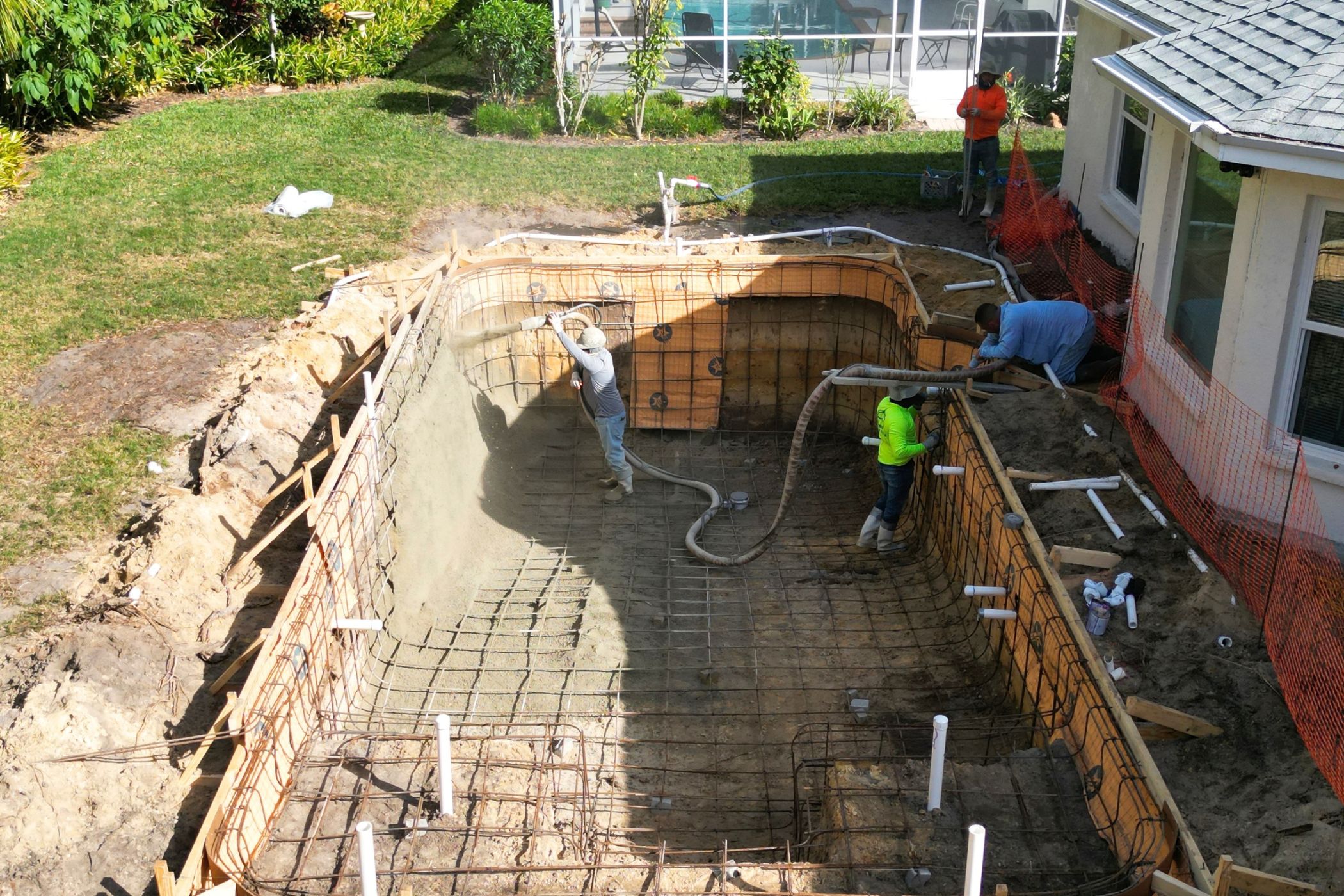
Your pool’s layout is finalized on site, excavation begins, and the hole is dug to spec. Steel reinforcement goes in right after and gets inspected before the next phase starts. This is the week the project stops being a drawing and becomes a real thing in your yard, and it usually moves faster than homeowners expect.
Weeks 2 to 3: Gunite and Rough Grade
This is where your pool actually takes shape. Our crew applies the gunite shell over the steel framework in a single session, hand shaping the walls, steps, benches, and any sun shelf as they go, then the surrounding yard is rough graded while the shell cures. According to the American Shotcrete Association, a sprayed concrete shell needs a minimum 7 day wet cure for basic strength, and a full 28 day moist cure is recommended before a plaster or pebble finish is applied, which is why this stage is never rushed even though the visible work moves fast.
Week 4: Plumbing and Equipment
Plumbing lines are installed and pressure tested to confirm there are no leaks before anything gets buried. Once inspections are approved, your pool equipment, pump, filter, heater, and any automation, is set on the equipment pad.
Weeks 5 to 6: Tile and Coping
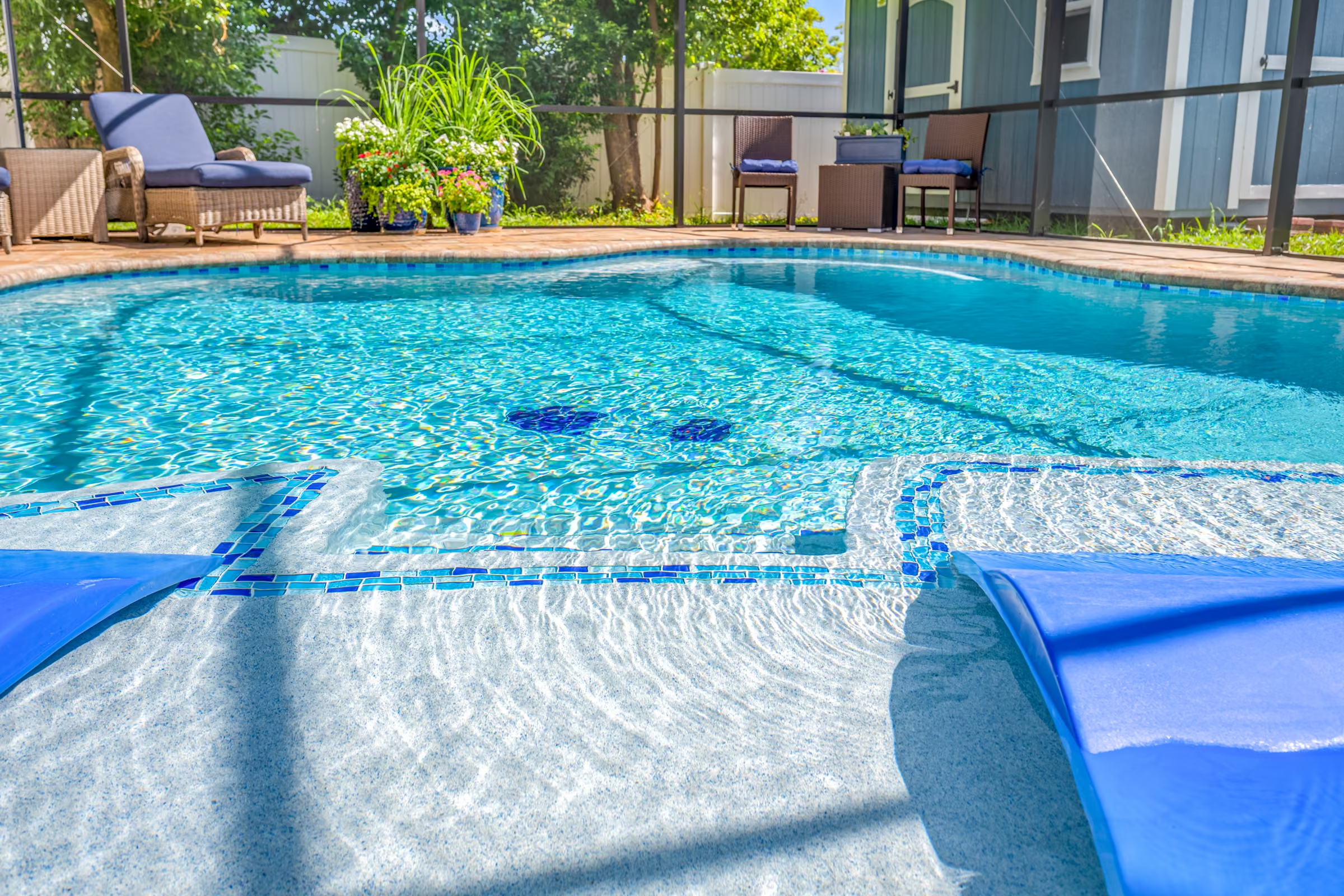
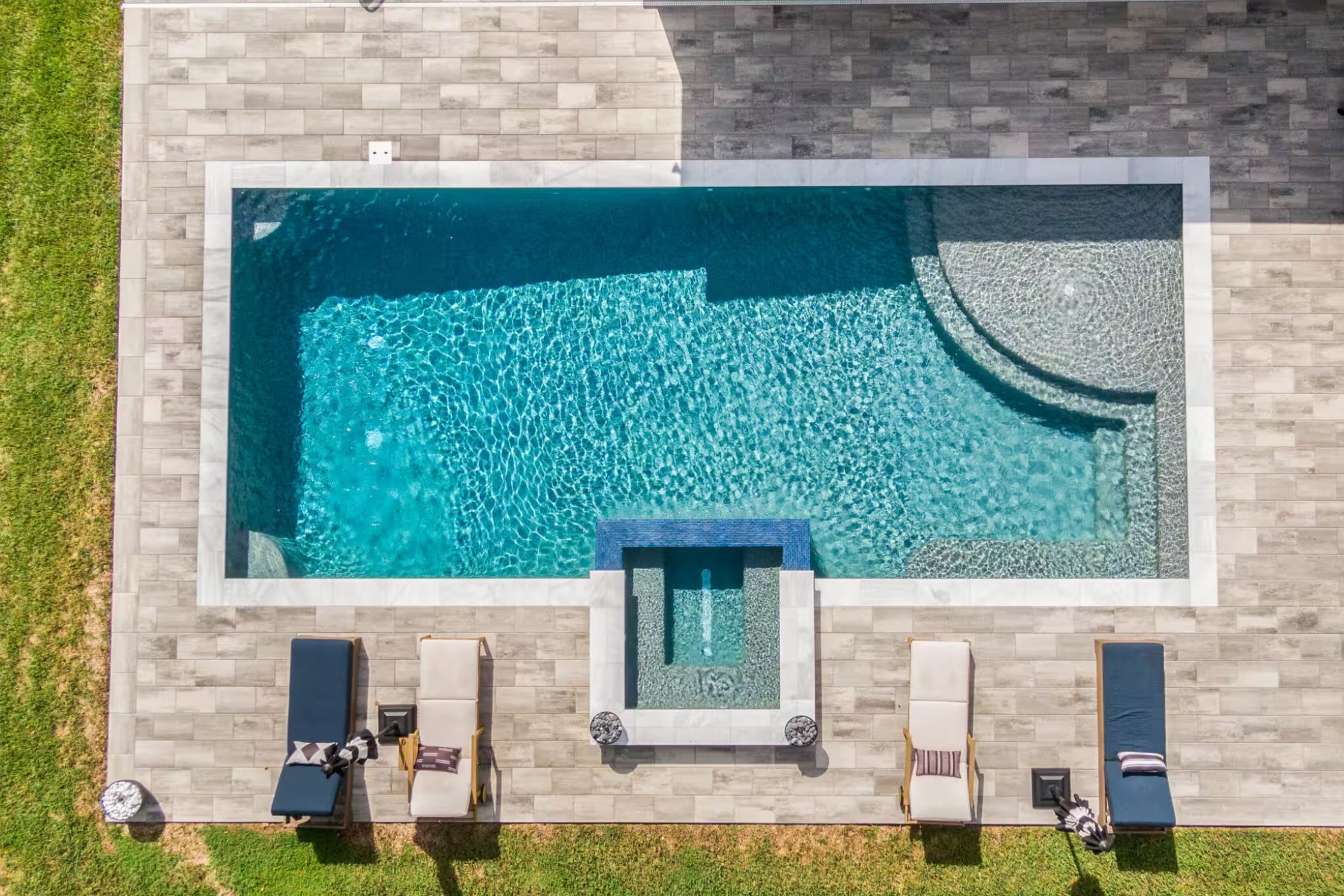
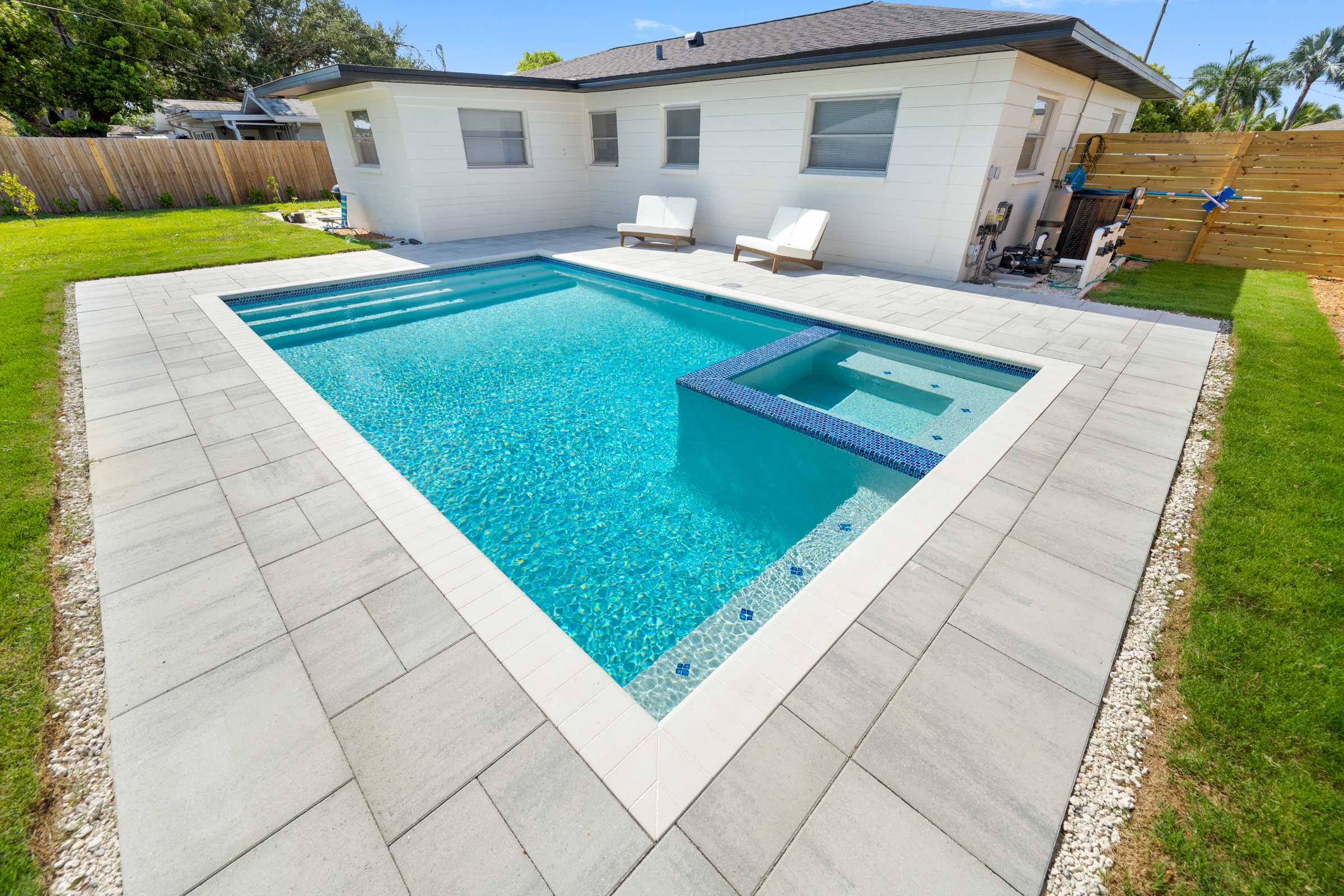
Waterline tile and coping go in during this stage, which is where the finished look of your pool really starts to come together. It is also the first point where the material selections you made during design become visible in the actual pool rather than on a sample board.
Week 7: Electrical and Bonding
Waterline tile and coping go in during this stage, which is where the finished look of your pool really starts to come together. It is also the first point where the material selections you made during design become visible in the actual pool rather than on a sample board.
Weeks 8 to 9: Deck Installation
Decking is installed around the pool, turning the space into an actual functional backyard rather than a hole surrounded by dirt.
Weeks 10 to 11: Interior Finish
Your interior finish, plaster, pebble, or quartz, is applied, the step that brings the whole project to life visually.
Week 12: Fill and Final Inspection
The pool is filled, equipment is started up, and final inspections are completed before you are cleared to swim.
Why Some Weeks Look Busy and Others Look Empty
One thing worth setting expectations on early: a pool build does not look like steady daily activity in your backyard. Some weeks have crews on site every day. Others have almost nobody there, because the shell is curing, an inspection is pending, or one trade has to finish before the next can start.
A quiet week is usually the schedule working correctly rather than the project stalling. The phases in this sequence are dependent on each other, and pushing the next one forward before the previous one is genuinely ready is how quality problems get built into a pool permanently. A crew that waits out a cure window is protecting the shell you are going to own for the next fifty years.
That said, there is a real difference between a planned quiet week and a project that has genuinely stopped moving, which is why regular communication from your builder matters as much as the schedule itself.
What Actually Pushes Timelines in Tampa Bay
Weather is the biggest variable, and it is a Florida specific one. Heavy rain during the summer wet season can delay excavation and interior finish work, both of which need dry, stable conditions. Extreme heat can affect plaster application timing as well.
Design complexity and project size matter too. A straightforward rectangular pool moves faster than a design with multiple water features, a spa, an automation system, or extensive custom tile work, simply because there is more for each crew to do.
Material lead times are next, particularly for imported tile, custom water features, or automation equipment, which is why locking in selections during design rather than after digging starts protects your schedule the most.
Design changes made mid build are the last major factor. Adjusting size, shape, or features after construction has started almost always costs more time than making that decision on paper first.
The one factor most homeowners underestimate is the builder itself. A crew that knows the difference between a City of Tampa submission, a Hillsborough County one, and a Pasco County one, and coordinates subcontractors tightly instead of letting a project sit idle between phases, is often the biggest single variable in whether a build lands at 8 weeks or 12.
What You Can Do to Keep Your Own Project Moving
Most of the timeline is in your builder’s hands, but a few things genuinely sit with you as the homeowner, and they are worth knowing up front.
Make your material selections early and hold to them. Tile, coping, decking, and interior finish choices all feed directly into ordering, and a selection that changes in week five can undo scheduling that was locked weeks earlier.
Get HOA paperwork in as soon as you have plans to submit, since that approval runs on its own timeline and is one of the few stages your builder cannot push along for you.
Keep access to the yard clear. Crews need room to bring in equipment and materials, and a blocked gate or an obstacle in the path can cost a day for reasons that have nothing to do with the actual work.
And ask questions during design rather than during construction. Every concern raised on paper is free. The same concern raised after the shell is sprayed becomes a change order with a schedule attached.
So How Long Does It Really Take?
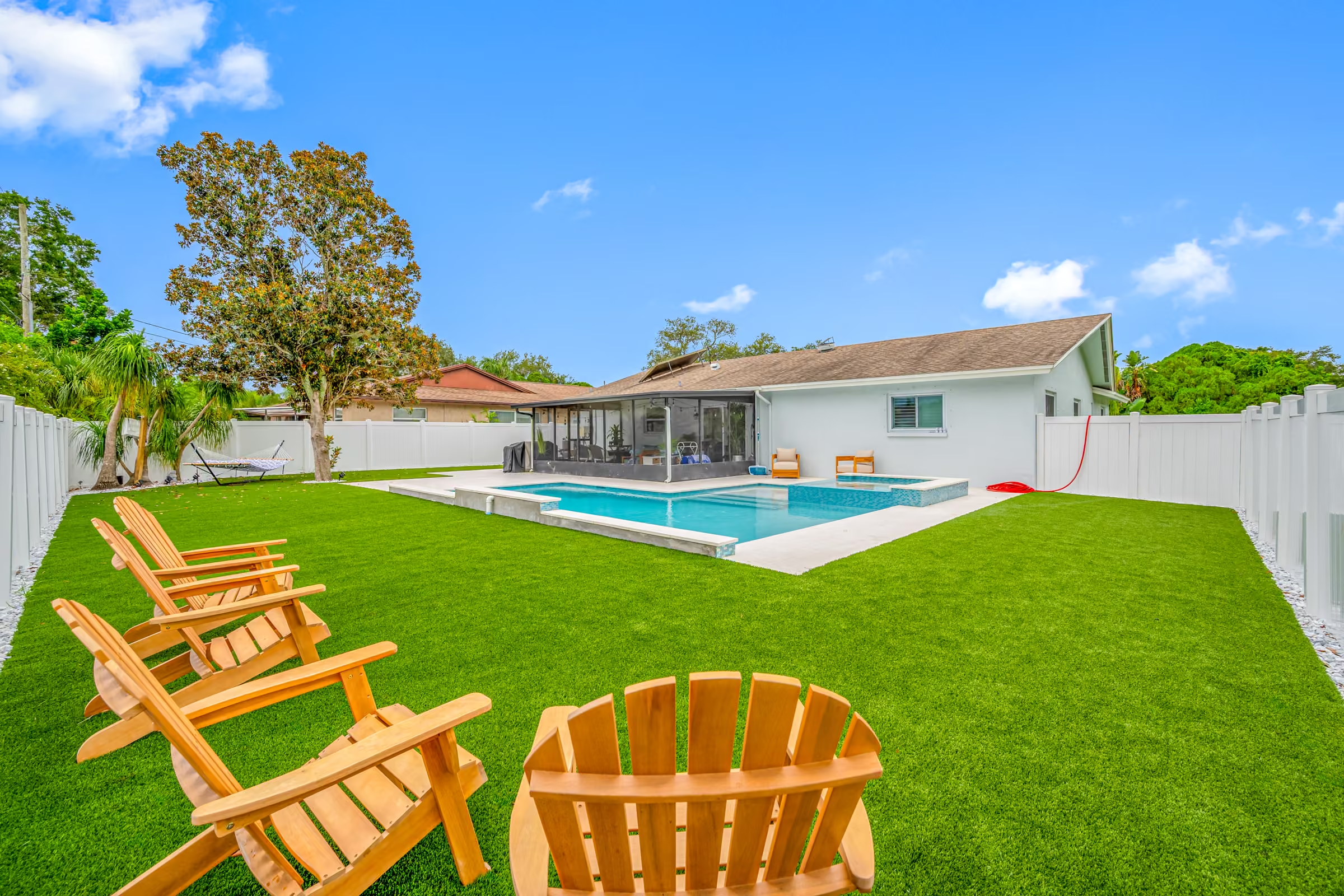
Most Splash City builds run about 8 to 10 weeks from breaking ground to final inspection, following the sequence above. Larger or more detailed projects, extra water features, custom tile work, or a bigger footprint, can extend that closer to 12 weeks. Permitting happens before any of this starts, and that stage is the one that varies most, running anywhere from 4 to 12 weeks depending on your jurisdiction and the season.
The honest way to think about it: once your permit is issued, this week by week sequence is what to expect.
What Happens After the Pool Itself Is Finished
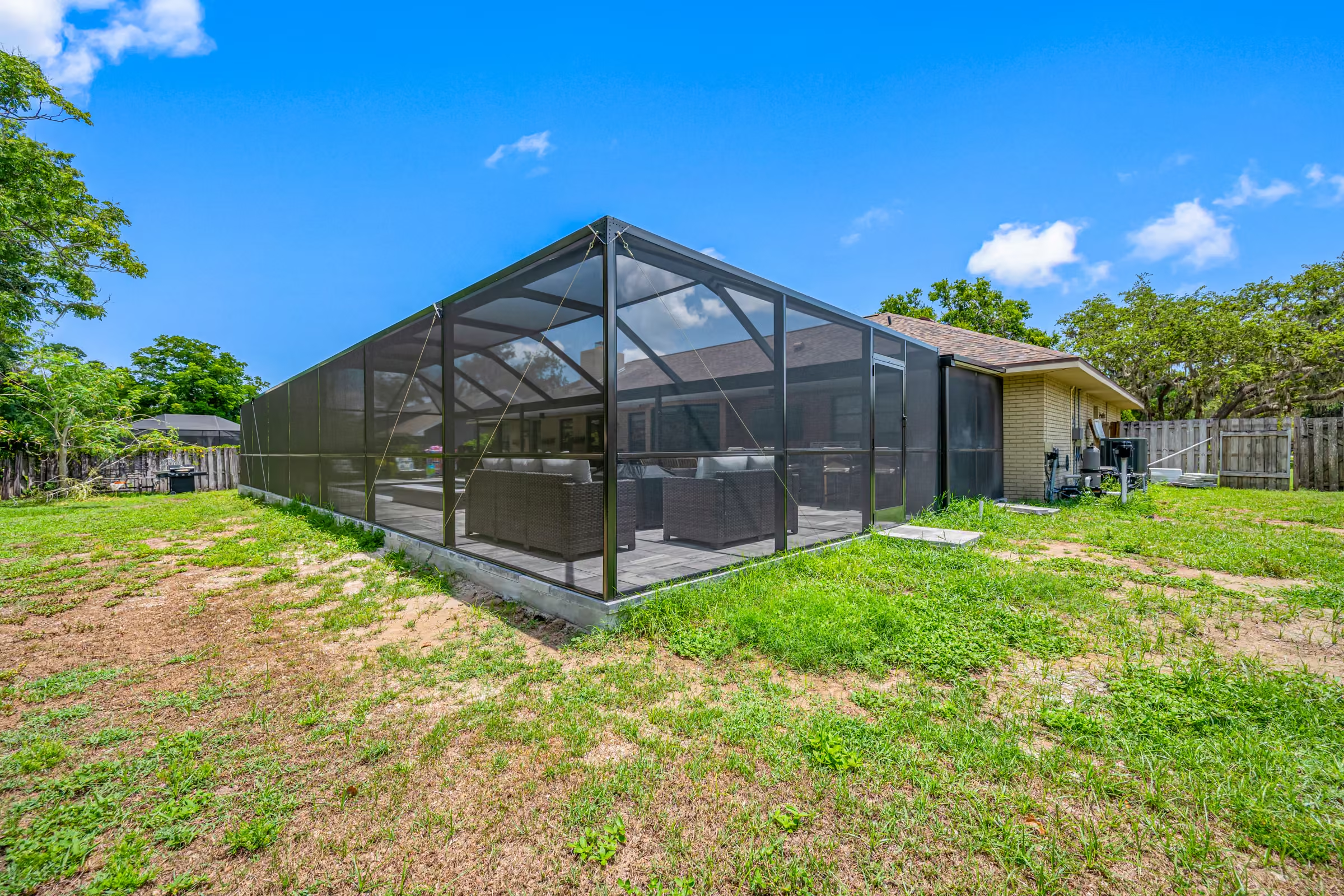
For a lot of Tampa Bay homeowners, the pool is not the last thing added to the backyard. A screen enclosure is one of the most common next steps, often planned alongside the pool itself so the framing and pool deck get built to work together from the start rather than retrofitted later.
Common Questions
From Permit to First Swim, Mapped to Your Property
Every property, every design, and every permitting jurisdiction is a little different, so the week by week sequence above is the general picture, not your specific one. The best way to know exactly where your project lands, and when you will actually be swimming, is to sit down with a builder who walks through it with you before you sign, not after. Schedule your free 3D design and estimate and we will map out what your backyard actually looks like from permit to first swim.